

- Office space refers to any dedicated physical environment where work is conducted, ranging from private leased suites to shared coworking desks and flexible meeting rooms.
- The three most evaluated factors when choosing office space in Ireland are location, lease flexibility, and all-in monthly cost — not just square footage.
- Flexible office arrangements, including short-term licences and coworking memberships, have become a practical alternative to traditional multi-year commercial leases for startups and SMEs.
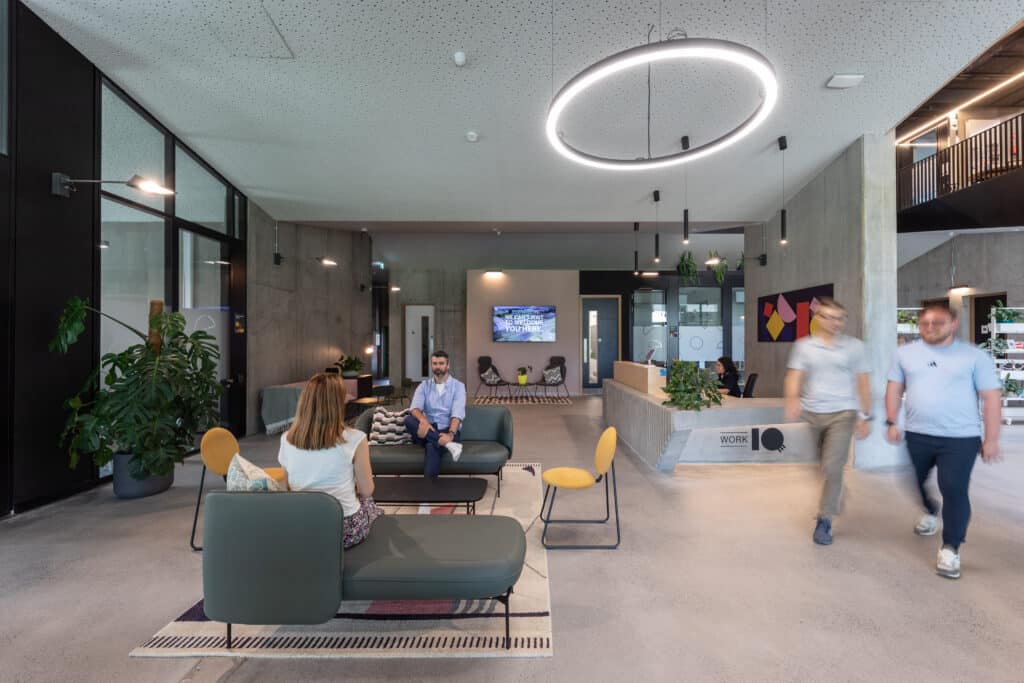
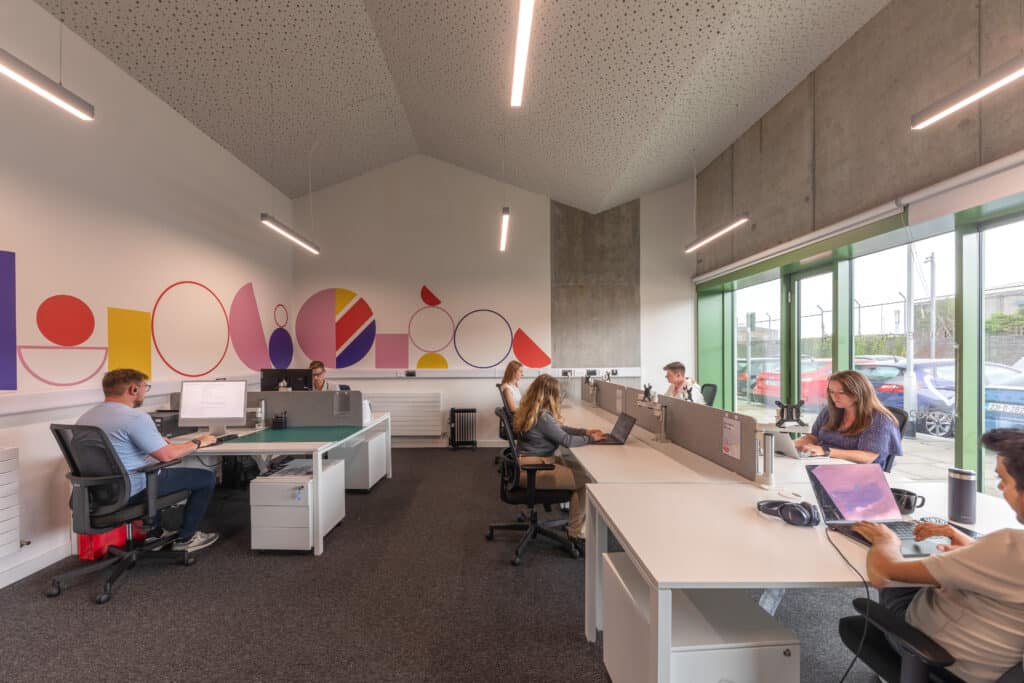
- In South Dublin, purpose-built centres like WorkIQ at Innovation Quarter Tallaght offer private offices, coworking desks, and meeting rooms under one roof, with community and business support included.
- The biggest risks teams face are signing inflexible leases too early, underestimating fit-out costs, and choosing space that isolates rather than connects them to peers and clients.
What does office space mean?
Office space is any physical environment set aside for professional work. That definition sounds simple, but in practice it covers a wide range of arrangements: a private suite in a commercial building, a dedicated desk in a shared coworking centre, a serviced office with reception and IT included, or a flexible hot-desk used by the hour. The type of space matters less than whether it fits how your team actually works.
The common myth is that office space is primarily a real estate decision — something you measure in square metres and price per square foot. In reality, the more consequential questions are about flexibility, community, and what the space enables. A founder signing a five-year commercial lease on day one is making a very different bet than one taking a monthly licence in a shared innovation centre. Both are using office space. The outcomes can be very different.
In Ireland, the term office space is used broadly to cover everything from traditional commercial units managed by landlords, to managed offices operated by workspace providers, to coworking centres where multiple businesses share infrastructure and common areas. Understanding which category you are looking at matters before you compare prices or sign anything.
Which parts of office space matter most?
Not all components of an office arrangement carry equal weight. Location, lease structure, and the quality of shared infrastructure tend to drive the most consequential decisions. Getting any one of these wrong is costly and slow to fix.
Location and accessibility
Location affects your team’s daily commute, your clients’ ability to visit, and your proximity to relevant business networks. For businesses in South Dublin, for example, choosing office space in or near Tallaght means access to strong public transport links, proximity to TU Dublin’s Tallaght campus, and a growing local business community — factors that matter differently to a ten-person startup than to a solo consultant.
Accessibility is not just about geography. It includes car parking, public transport routes, and whether the building is accessible outside standard business hours. Many growing businesses need 24/7 access, which rules out standard commercial units with landlord-controlled entry.
Lease or licence structure
Traditional commercial leases in Ireland commonly run three to five years or longer, with upward-only rent review clauses and personal guarantees. That structure works for established businesses with predictable headcount and cash flow. For startups and early-stage SMEs, it can create serious financial exposure.
Managed offices and coworking centres typically operate on licence agreements rather than leases. Licences are shorter, more flexible, and usually include services — broadband, utilities, cleaning, building management — bundled into a single monthly fee. This all-in pricing model makes budgeting more predictable and removes the hidden costs that catch businesses out in bare commercial units.
Infrastructure and services
The infrastructure question goes beyond having a desk and a broadband connection. It includes meeting room availability, printing and postal services, kitchen and breakout facilities, IT support, and whether the building is managed professionally. In purpose-built innovation centres, these are typically included or available on demand. In a standard commercial unit, you arrange and pay for each separately.
How does office space work in practice?
In practice, most businesses choose from three main models: traditional leased offices, serviced or managed offices, and coworking or shared workspace. Each operates differently in terms of cost structure, commitment, and what is included.
| Type | Typical commitment | What’s included | Best suited for |
|---|---|---|---|
| Traditional leased office | 3-5+ years | Bare space; you arrange fit-out, utilities, services | Established businesses with stable headcount |
| Serviced / managed office | Monthly to 12 months | Furnished space, broadband, reception, utilities | Teams wanting private space without long leases |
| Coworking / shared workspace | Day pass to rolling monthly | Desk, broadband, meeting rooms, community events | Freelancers, startups, remote workers, small teams |
The practical difference between these models becomes clear when you calculate the true monthly cost. A traditional leased unit in Dublin might look cheaper per square metre, but once you add fit-out costs, furniture, broadband installation, utilities deposits, and business rates, the actual outlay in the first year is substantially higher. Serviced and coworking options carry a higher headline rate but a much lower total cost of entry.
For a small team of two to five people, a private office inside a managed workspace centre is often the most practical starting point. It gives privacy and a professional address without the capital commitment of a standalone lease.
Where does office space in Dublin fit in the wider picture?
Dublin’s office space market covers a wide range of options, from premium city-centre Grade A buildings to suburban managed centres and enterprise parks. For businesses in South Dublin specifically, the market has historically been thinner — with fewer purpose-built options close to communities like Tallaght, Clondalkin, and Rathfarnham.
That gap has started to close. WorkIQ at Innovation Quarter Tallaght is one example of how the model works in practice: a purpose-built €16 million innovation centre offering private offices, coworking desks, and meeting rooms alongside mentoring, events, and business support — all within South Dublin County Council‘s broader enterprise development framework.
For businesses evaluating office space in Dublin, the city-centre versus suburban question is worth examining carefully. City-centre locations carry a premium on rent and often on commute time. Suburban innovation centres can offer comparable infrastructure, faster access for South Dublin-based teams, and a stronger sense of local community — at a more accessible cost.
What examples or gaps should teams watch for?
Several practical pitfalls come up repeatedly when businesses choose office space without fully evaluating their options.
Signing too early or too long
One of the most common mistakes early-stage businesses make is signing a multi-year commercial lease before their team size, revenue, or working model is stable. If your headcount doubles or halves in year two, a five-year lease becomes a serious liability. Starting with a flexible licence and graduating to a longer commitment when the business is more settled is usually the more prudent path.
Underestimating hidden costs
Bare commercial units require fit-out, furniture, broadband installation, and often a fit-out reinstatement clause when you leave. These costs are rarely included in the advertised rent. Before comparing a traditional lease against a managed office, build a true total-cost comparison that includes all setup and ongoing service costs.
Choosing space that isolates
Office space is not just infrastructure. For many startups and growing SMEs, the peer community around them — other founders, potential collaborators, mentors, and clients — is as valuable as the desk itself. A standalone unit in an industrial estate might be cheaper per square metre, but it offers none of that. Shared environments where multiple businesses work under one roof are specifically designed to generate those connections.
Ignoring growth headroom
A space that fits your team perfectly today may have no room for two additional hires in six months. Ask providers directly about upgrade paths: can you move from a two-person office to a four-person office within the same building? Flexibility within a centre is a practical advantage that is easy to overlook when comparing initial prices.
What should readers know about the definition of office space?
The term office space is used loosely in search results and property listings, which creates confusion. In Irish commercial property, it can refer to a raw shell unit, a fully furnished serviced office, a hot desk in a coworking centre, or a private room inside a managed workspace. These are meaningfully different products with different cost structures, legal arrangements, and day-to-day experiences.
When a listing says “office space to rent,” it is worth confirming: Is this a lease or a licence? Is it furnished or unfurnished? Are utilities and broadband included? Is there a reception or building management service? Is there a minimum term? The answers to those questions matter far more than the per-square-metre headline rate.
In Irish law, a commercial lease and a licence to occupy are distinct instruments. Leases create a property interest and come with greater tenant rights and obligations. Licences are more flexible but offer less security of tenure. Most managed offices and coworking centres operate on licences, which is part of what makes them easier to enter and exit.
What should readers know about how office space works?
Understanding how office space works operationally helps you evaluate options more accurately:
- In a traditional leased office, you are responsible for everything: the fit-out, the services, the maintenance, and the exit reinstatement.
- In a managed or serviced office, the operator handles building management, cleaning, broadband, and common areas.
- In a coworking centre, you share those services with other members and typically access meeting rooms through a booking system.
The operational model also affects your team’s day-to-day experience. Managed centres with active programming — networking events, mentoring sessions, business workshops — create a different working environment than a quiet private floor in a commercial block. For founders and small teams, that ambient activity can be genuinely useful: it surfaces connections, keeps energy levels up, and provides informal peer support that is hard to replicate in isolation.
Practically speaking, most flexible workspace providers in Ireland price by the desk, the room, or the membership tier. All-in monthly pricing is common and makes budgeting straightforward. Some centres offer day-pass access for occasional users, which suits businesses that need a professional address and meeting room access without a full-time presence.
When does this matter most?
The office space decision becomes most consequential at specific inflection points in a business’s life. Getting it right at these moments can save significant time, money, and disruption.
- At launch: A new business needs a professional address, a reliable workspace, and ideally access to peers and advisors. A flexible managed office or coworking membership is almost always a better starting point than a standalone lease.
- At first hire: When a solo founder brings on their first employee, the working environment changes. You need a space that works for two people consistently — not just a home office or a coffee shop.
- At rapid growth: A team scaling from five to fifteen people quickly needs a workspace provider who can accommodate that growth without forcing a move. Flexibility within a centre matters enormously here.
- At a lease renewal decision: When an existing lease comes up for renewal, it is worth re-evaluating the full market rather than defaulting to renewal. Managed workspace options have improved significantly in recent years, and the gap in cost and quality between traditional leases and managed centres has narrowed.
- When remote work shifts: If your team’s working pattern changes — more remote days, hybrid arrangements, or a return to full-time in-office — your space requirements change too. Flexible licences make it easier to adjust without penalty.

The right office space is not the one with the lowest headline rent. It is the one that fits how your team works today, gives you room to grow, and connects you to the people and resources that help the business move forward. For businesses in South Dublin, that combination is increasingly available close to home — without a city-centre commute or a long-term lease commitment.
Frequently asked questions about office space
How should teams compare options for office space?
Start by calculating the true all-in monthly cost for each option, including fit-out, furniture, utilities, broadband, and any service charges. Then compare lease or licence length, notice periods, and what happens if your team size changes. Finally, assess location practically: commute time for your team, client accessibility, and proximity to relevant business networks. A lower headline rent in an inconvenient location often costs more in practice.
Which criteria matter most before choosing office space?
The five criteria that matter most are: flexibility of the licence or lease term, all-in monthly cost, location and accessibility, quality of broadband and infrastructure, and the working environment — including whether the space has an active community or operates in isolation. For early-stage businesses, flexibility and community tend to outweigh raw cost per square metre.
What risks should teams evaluate before choosing office space?
The main risks are: signing a long lease before your team size is predictable, underestimating fit-out and setup costs in bare units, choosing a location that is hard for your team to reach daily, and selecting a space with no room to grow. For very early-stage businesses, personal guarantees on commercial leases are a specific financial risk worth taking legal advice on before signing.
How does office space in Dublin affect the decision?
Dublin’s office market is segmented by location and quality tier. City-centre Grade A space carries a significant rent premium and is typically suited to larger, established businesses. Suburban managed centres and innovation hubs — particularly in areas like South Dublin — offer comparable infrastructure at more accessible price points, with shorter licence terms and built-in services. For businesses based in or serving South Dublin communities, proximity to that local market is often more valuable than a city-centre postcode.
How does office space to rent differ from buying office space?
In Ireland, the vast majority of businesses rent rather than buy office space. Purchasing commercial property requires significant capital, limits flexibility, and ties business performance to property values. Renting — whether through a traditional lease or a managed licence — preserves capital and keeps the business agile. For SMEs and startups in particular, renting is almost always the more practical choice.
What is the difference between flexible office space and a traditional lease?
A traditional commercial lease typically runs three to five years or longer, gives you a bare or semi-fitted unit, and makes you responsible for all services and fit-out. A flexible office arrangement — whether a serviced office or coworking membership — operates on a monthly or short-term licence, includes services in the price, and allows you to scale up or down without the legal and financial exposure of a long-term lease. For most growing businesses, the flexibility of the latter is worth the higher per-desk cost.