

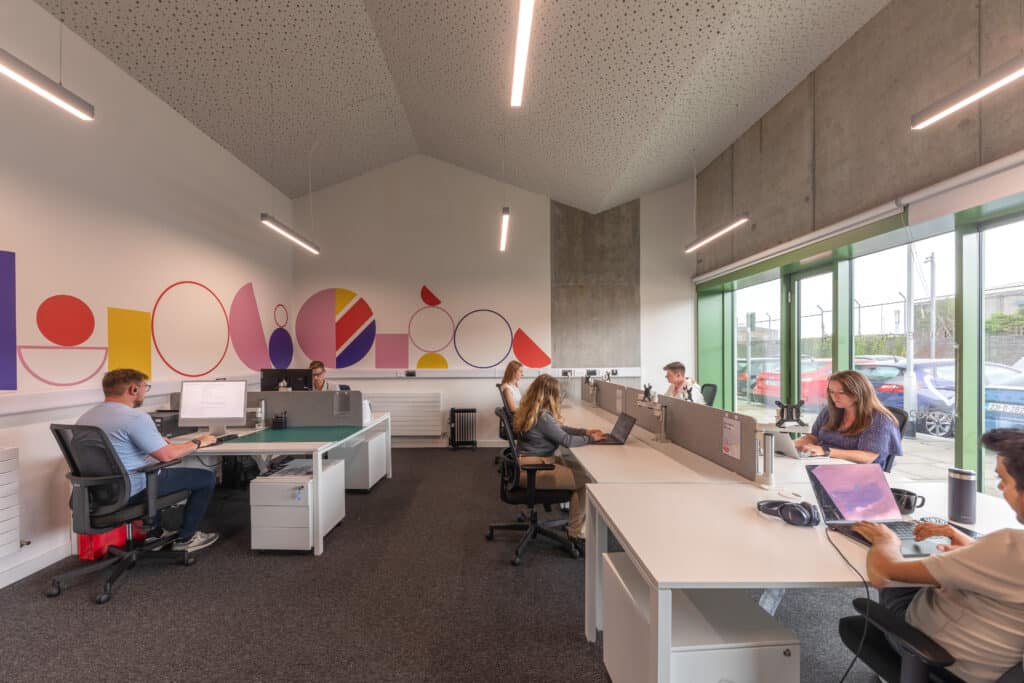
Searching “coworking space near me” is less about finding a desk and more about finding the right working environment for your specific situation — proximity is one factor among several. Coworking spaces typically offer three membership types: hot desks, dedicated desks, and private offices, each suited to different work patterns and team sizes.
- Location matters most when daily commute, in-person collaboration, or access to a local business community is central to how you work.
- Culture fit, community, and practical amenities often matter more than raw distance — a space 20 minutes away that fits your work style may serve you better than one around the corner.
- WorkIQ, based in Innovation Quarter Tallaght, is one example of a purpose-built coworking centre in South Dublin designed to serve startups, SMEs, and entrepreneurs with flexible workspace options alongside mentoring and events.
What does “coworking space near me” actually mean?
When someone searches “coworking space near me,” they are usually looking for a shared professional workspace they can reach without a long commute. But the phrase carries more weight than it first appears. It is not just a map query. It signals a need for a working environment that fits — in terms of location, yes, but also in terms of community, flexibility, and cost.
A coworking space is a shared office facility where individuals and teams from different organisations work alongside one another. Members pay for access rather than signing a traditional lease. The “near me” part reflects a practical reality: where you work shapes how you work. Proximity to home, to clients, or to a particular neighbourhood community can all be meaningful.
The myth worth correcting early is this: the nearest option is not automatically the best one. Searching locally is a sensible starting point, but the space that adds the most value to your working week is the one that matches your actual needs — not just the one with the shortest commute.

Which parts of a coworking space matter most?
Once you have identified spaces within a reasonable distance, the decision comes down to a handful of practical factors. Understanding what each one means helps you compare options honestly rather than defaulting to the closest or cheapest.
Membership type and flexibility
Most coworking spaces offer three core options. Hot desks give you access to any available seat — good for people who work independently and do not need the same spot every day. Dedicated desks give you a fixed, personal workspace within a shared environment. Private offices give a team its own enclosed space while still accessing shared amenities and the broader community. Knowing which type fits your work pattern before you visit saves time and avoids committing to the wrong plan.
Amenities and infrastructure
Reliable broadband, meeting rooms, printing, kitchen facilities, and 24/7 access are the baseline expectations most workers bring to a coworking search. Beyond the basics, purpose-built centres often include event spaces, mentoring programmes, and on-site business support — things that a converted office or coffee shop simply cannot offer. If your work involves regular client meetings or collaborative sessions, check that bookable meeting rooms are available and reasonably priced as add-ons.
Community and peer network
This is the factor most people underweight when they first search locally. The people working around you influence your energy, your opportunities, and your sense of belonging. A coworking space with an active community of founders, creatives, and growing businesses creates informal mentoring, referrals, and collaboration that you cannot replicate by working from home. Ask who else works there before you commit.
How does coworking space work in practice?
The day-to-day reality of coworking is simpler than people expect. You sign up for a membership plan — usually monthly, with the option to pay for individual days. You arrive, connect to the Wi-Fi, and work. Shared spaces handle the things a traditional office lease requires you to manage yourself: building maintenance, utilities, cleaning, and reception.
Access is typically handled by a key fob or app-based entry, which is how 24/7 access becomes practical. You do not need to interact with a landlord, manage a service charge, or negotiate a break clause. The flexibility is the point.
For a growing team, the practical value is that you can scale up or down without penalty. A solo founder can start on a hot desk, move to a dedicated desk as their workload grows, and eventually take a private office when they hire their first employees — all within the same building and community.
How does culture coworking connect to searching locally?
The phrase “culture coworking” points to something real: coworking spaces are not interchangeable. Each one has a character shaped by the people who use it, the events it runs, and the values it is built around.
When you search locally, you are implicitly searching for a culture that fits your working life. A space built for tech startups will feel different from one built for freelancers, creatives, or professional services firms. Neither is wrong — but the fit matters. Spend time in a space before committing. Most coworking centres offer a trial day or a short introductory visit for exactly this reason.
In South Dublin, WorkIQ applies this community-first approach by bringing startups, SMEs, and entrepreneurs together inside Innovation Quarter Tallaght — a purpose-built €16 million innovation centre developed in partnership with South Dublin County Council and TU Dublin. The goal is not just to provide desks; it is to create a local hub where businesses can grow alongside each other.
What examples or gaps should you watch for?
Not every space that calls itself a coworking space delivers the full experience. Here are some common gaps worth checking before you sign up.
- Overcrowding: Hot desk spaces can become noisy and cramped during peak hours. Ask about average occupancy before committing to a plan that relies on always finding a quiet spot.
- Hidden costs: Some spaces advertise a low base rate but charge separately for meeting room bookings, printing, parking, or after-hours access. Get a clear picture of your all-in monthly cost.
- Inactive community: A space with members who keep to themselves and never interact is just a shared office. Look for regular events, introductions, or a community manager who actively connects people.
- Poor connectivity: Broadband quality varies significantly. If your work is bandwidth-intensive, ask specifically about upload speeds and whether there is a wired ethernet option.
- Inflexible contracts: One of the main reasons to choose coworking over a traditional lease is flexibility. If a space requires a minimum 12-month commitment, it is worth asking whether that trade-off makes sense for your current stage.


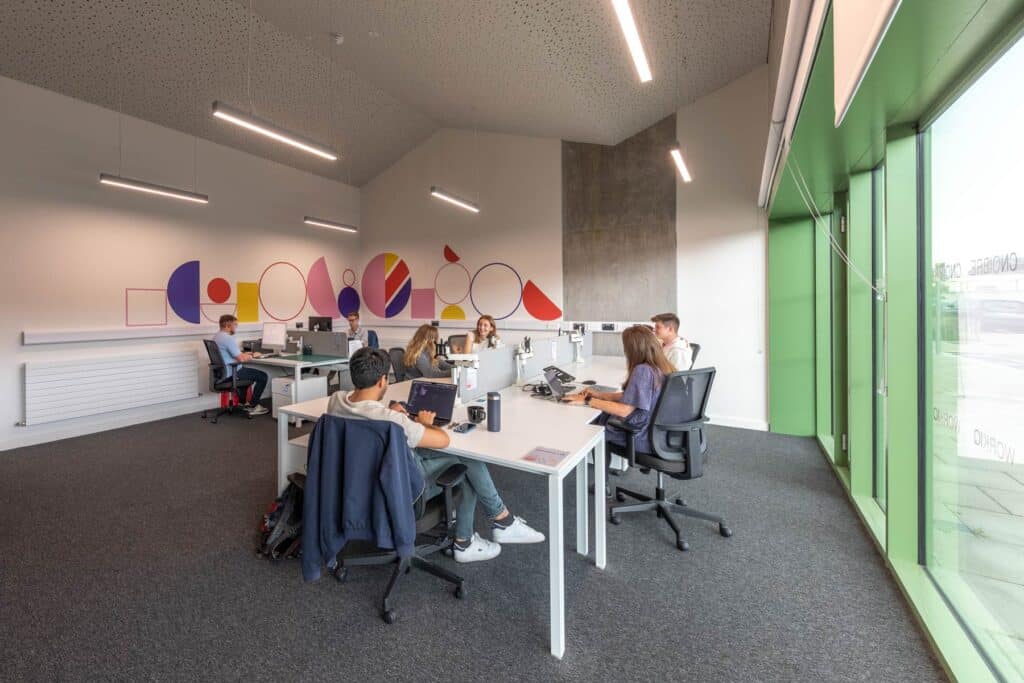
What should you know about the definition of coworking?
Coworking is a model of working in which individuals and teams share a physical workspace and, in most cases, its associated community and resources. It emerged as a distinct category in the mid-2000s and has grown significantly since, particularly in cities and towns where commercial property costs make traditional leases impractical for early-stage businesses.
The defining feature is not the shared desk. It is the membership model. You pay for access and flexibility rather than for a fixed unit of space. This distinction matters because it changes the relationship between the worker and the building: you are a member of a community, not a tenant of a floor plan.
For Irish businesses in particular, coworking has become a practical alternative to the Dublin city centre office market, where commercial rents have historically been high. Purpose-built centres in locations like Tallaght, which sit within the Greater Dublin Area but outside the core city, offer modern infrastructure at a more accessible price point — without requiring businesses to move far from their client base or talent pool.
How does it work for day-to-day business operations?
For a business using coworking as its primary base, the operational reality is straightforward. Your meeting space, your broadband, and your daily working environment are all handled through one membership. You are not managing a landlord relationship, a utility account, or a cleaning rota.
For a remote worker or freelancer, coworking provides structure and separation from home. The commute — even a short one — creates a mental boundary between work and personal time that many people find genuinely helpful for focus and wellbeing.
For a team that is partly remote and partly in-person, coworking offers a neutral, professional meeting point without the overhead of a full office. Team members can book a meeting room for a few hours, collaborate in person, and return to their individual arrangements without anyone needing to host the meeting in a living room.
When does finding the right local coworking space matter most?
Proximity becomes genuinely important in a few specific situations. If you have daily in-person commitments — client meetings, collaborative sessions, or team standups — then a space you can reach in under 20 minutes makes a real practical difference. A long commute to a coworking space defeats much of the purpose.
Location also matters when you want to be embedded in a specific local business community. If your clients, suppliers, or potential collaborators are concentrated in a particular area, being physically present in that community creates opportunities that remote work does not. This is one reason why neighbourhood-specific coworking spaces, rather than large multi-site chains, often generate stronger peer networks for locally-rooted businesses.
Finally, proximity matters when your business is at an early stage and you need to keep costs predictable. A coworking space close to home reduces transport costs and time. It also makes it easier to work longer or shorter hours without the friction of a long journey at either end of the day.
If none of those factors apply strongly to your situation — if you work independently, rarely meet clients in person, and have no particular need for a local peer network — then the nearest option may genuinely be the right one. But if community, culture, and support matter to how you build your business, it is worth travelling a few extra minutes to find a space that fits.
Frequently asked questions about coworking spaces
What is a coworking space?
A coworking space is a shared professional workspace where people from different organisations work alongside one another under a membership model. Members pay for access to desks, meeting rooms, and shared amenities rather than signing a traditional office lease.
How should I evaluate a coworking space near me?
Start with membership type and flexibility, then assess amenities, community activity, broadband quality, and all-in monthly cost. Visit in person before committing — most spaces offer a trial day. The right space is the one that fits your work pattern, not just the one with the shortest commute.
What mistakes should I avoid when choosing a coworking space?
The most common mistakes are choosing on price alone without checking hidden costs, overlooking the quality of the community, and committing to a long contract without testing the space first. Also check peak-hour occupancy if you rely on quiet, focused work time.
How does culture coworking relate to searching locally?
Every coworking space has a distinct character shaped by its members, events, and values. Searching locally surfaces options by geography, but culture fit determines whether a space actually supports your working life. Look for a space whose community reflects the kind of businesses and people you want to work alongside.
Is coworking suitable for small teams, not just solo workers?
Yes. Most coworking centres offer private offices for teams of two or more, alongside shared coworking areas. This allows a small team to have its own enclosed workspace while still accessing the broader community, events, and shared amenities of the building.