


The most common booking mistakes include underestimating room capacity, overlooking AV setup requirements, and choosing a venue without checking cancellation terms.
You need a room. You need it nearby. And you probably need it soon. The search “conference meeting rooms near me” usually means someone is already past the research phase — they want a specific, bookable space that works for their team today or this week. The challenge is knowing which type of venue actually fits the meeting, and what to check before you commit.
This guide walks through the most common friction points, how to diagnose what you actually need, and how to avoid the mistakes that turn a straightforward booking into a stressful morning.
What signs show you have a conference room problem worth solving?
The clearest sign is a meeting that has no home. Your regular office is too small, too noisy, or simply unavailable. A client is coming in and the kitchen table will not do. A team workshop needs a whiteboard, reliable broadband, and room for six people to move around. These are not edge cases — they come up regularly for growing businesses, freelancers, and SMEs.
Other warning signs include:
- Recurring meetings held in cafes or hotel lobbies because there is no dedicated space
- Presentations disrupted by background noise or poor AV equipment
- Clients arriving at a location that does not match the professional impression you want to make
- Teams spending more time sourcing a room than preparing for the meeting itself
If any of these patterns sound familiar, the problem is not just inconvenience — it is a real drag on productivity and professional credibility.
What root causes usually create conference meeting room problems?
Most conference room headaches trace back to one of three root causes: no permanent base, a base that has outgrown its meeting infrastructure, or a one-off need that does not justify a long-term commitment.
No permanent base
Freelancers, remote-first teams, and early-stage startups often work from home or shared spaces that were never designed for client-facing meetings. When a pitch or a planning session comes up, they need to find a professional venue fast.
Outgrown infrastructure
A small business that started with a single meeting room quickly hits a ceiling. When the team grows or the meeting frequency increases, that one room becomes a bottleneck — double-booked, undersized, or lacking the equipment needed for hybrid calls.
One-off or irregular need
Some meetings are quarterly or project-specific. Renting a dedicated office just to host a half-day workshop every few months makes no financial sense. Hourly or half-day bookings at a nearby venue are the practical answer.
How should teams diagnose what they actually need?
Before searching for venues, spend five minutes answering four questions. The answers will narrow your options significantly and prevent you from booking the wrong type of space.
| Question | Why it matters | What to check |
|---|---|---|
| How many people? | Room capacity is the first filter | Confirm seated capacity, not just standing room |
| How long is the meeting? | Pricing models vary — hourly, half-day, full-day | Ask about minimum booking durations |
| What equipment is needed? | AV, projector, video call setup, and whiteboard needs differ by meeting type | Confirm what is included vs. what costs extra |
| How formal is the setting? | A client pitch needs a different environment than an internal brainstorm | Check photos, not just descriptions |
Once you have answers to these four questions, you can match them against the venue types available near you.
What should teams fix first when searching for conference meeting rooms?
Start with proximity and availability, then layer in the other requirements. The most common mistake is spending time evaluating a venue’s features before confirming it is actually free on the date you need it.
A practical sequence looks like this:
- Check availability first. Contact or book online before investing time in a site visit or detailed comparison.
- Confirm the all-in price. Ask whether AV equipment, broadband, printing, tea and coffee, and VAT are included. The headline rate rarely reflects the true cost.
- Verify the cancellation policy. Short-notice cancellation fees vary widely. A 48-hour policy is common; some venues charge the full rate for same-day cancellations.
- Check access logistics. Is there parking? Is the entrance clearly signposted for guests who have never visited before? Is there a reception desk to greet arrivals?
- Test the tech. If you are running a hybrid meeting or a presentation, confirm the broadband speed, screen size, and whether the room has a dedicated video conferencing setup.
What does “conference meeting rooms near me” actually mean?
As a search query, “conference meeting rooms near me” is navigational — the person searching already understands what a conference room is and is looking for a specific nearby option to book. It differs from a research query like “what is a conference room” or a comparison query like “coworking vs hotel meeting room.”
In practice, it covers a range of venue types: dedicated meeting rooms inside coworking centres, hotel conference suites, community enterprise centres, and private office buildings that rent out rooms by the hour. The word “conference” signals that the searcher likely needs a room that can handle more than a one-to-one — typically a group of four or more, with some form of presentation or structured agenda.
The “near me” component is doing real work in this search. It means the person wants a local result — somewhere they can walk or drive to without significant travel time. This makes location accuracy and clear address information among the most important factors when evaluating options from search results.
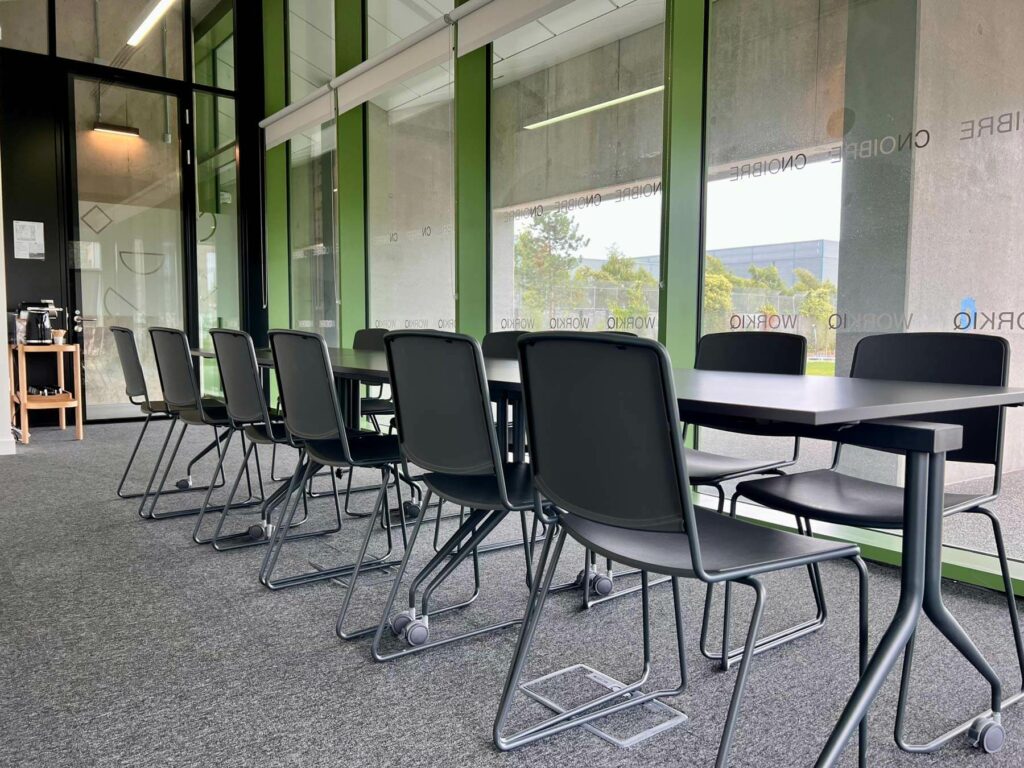
How does booking a meeting room near you actually work?
Most modern meeting room venues offer online booking, either through their own website or through a third-party platform. The typical process involves selecting a date, choosing a room size, picking a time slot, and confirming any add-ons such as catering or equipment. Platforms listing small meeting rooms in Dublin are a practical starting point for teams that want to compare multiple venues and availability in one place.
For coworking centres and innovation hubs, rooms are often available to non-members as well as members — sometimes at different rates. It is worth asking whether a day pass or a short-term membership makes more financial sense if you need the room regularly.
For hotel venues, the process is often handled by a dedicated events or reservations team rather than a self-service booking tool. This adds a step but can also mean more flexibility for bespoke requirements.
Key things to confirm at the point of booking:
- Room layout — boardroom, classroom, theatre, or cabaret style
- Maximum seated capacity for your preferred layout
- What equipment is set up by default and what requires advance notice
- Whether early access is available for setup time
- The exact cancellation and amendment policy in writing
Where does WorkIQ fit for South Dublin teams?
For startups, SMEs, and growing teams based in South Dublin, WorkIQ at Innovation Quarter Tallaght offers meeting rooms as part of a broader flexible workspace environment. The centre is purpose-built inside a €16 million innovation hub, which means the infrastructure — broadband, AV, reception, and room layout — is designed for working meetings rather than adapted from a hotel or converted office.
Meeting rooms at WorkIQ sit alongside private offices, coworking desks, and a community of founders and growing businesses. That context matters for teams who want a professional setting without the formality or cost of a hotel venue, and who value being part of a working community rather than just renting a room by the hour. For teams specifically based in the south of the city, meeting rooms in South Dublin (or Tallaght) offer an additional benchmark for comparing local availability and pricing.
Frequently asked questions about finding conference meeting rooms
Where should you look first when searching for a conference meeting room nearby?
Start with a local search and filter by availability on your required date. Coworking centres, innovation hubs, and business centres typically offer the most flexible booking options for short or irregular use.
How can you quickly find the right venue without wasting time?
Confirm availability before evaluating features. Know your capacity requirement, meeting duration, and AV needs before you contact any venue. This narrows the shortlist to two or three realistic options within minutes rather than hours of comparison.
What are the most common booking mistakes to avoid?
Underestimating capacity is the most frequent error — rooms that seat eight on paper often feel cramped with six people and a projector screen in place. Other common mistakes include not confirming the all-in price, missing the cancellation window, and failing to test the broadband or AV setup before the meeting starts.
How do you book a meeting room on a short-term or one-off basis?
Most coworking centres and innovation hubs offer hourly or half-day bookings without requiring a long-term membership. Some also offer non-member day rates.
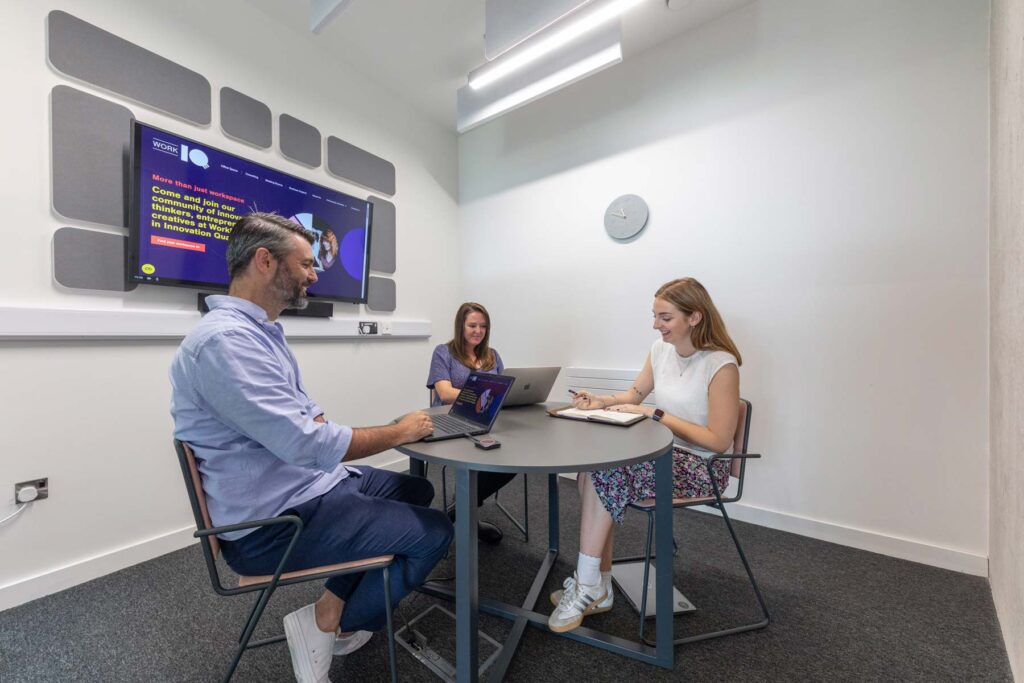
What is the difference between meeting rooms rental and a coworking day pass?
A meeting room rental gives you exclusive use of a specific room for a set period, usually priced by the hour or half-day. A coworking day pass gives you access to a shared workspace but not necessarily a private room. If you need a private, client-facing space, a dedicated meeting room rental is the right option rather than a day pass.
What should you do next?
If you are at the point of searching for a conference meeting room nearby, the most useful next step is to confirm your requirements before you start comparing venues. Write down the date, the number of attendees, the meeting duration, and the two or three equipment requirements you cannot do without. That short list will cut your search time significantly.
If you are based in South Dublin and need a professional meeting room without a long-term commitment, it is worth checking what is available locally at a purpose-built centre before defaulting to a hotel or a borrowed boardroom. The right room is usually closer — and more affordable — than you expect.