

Finding the right workspace in Dublin is not a one-search decision. The city and its surrounding areas have a genuinely varied supply: city-centre coworking hubs, suburban innovation centres, serviced offices, and hot-desking arrangements that suit very different types of work. The gap most people hit is not a shortage of options — it is the absence of a clear method for sorting through them.
This article frames workspace search as a repeatable process. Whether you are a solo founder, a growing SME, or a team relocating from home working, the same framework applies: define your inputs, apply consistent criteria, and trial before you commit.
What the Evidence on Dublin Workspaces Actually Shows
Dublin’s workspace landscape has expanded significantly beyond traditional long-lease offices. The strongest signal from available evidence is that demand from startups, SMEs, and hybrid teams has driven growth in flexible and community-oriented spaces, particularly outside the city centre where cost pressure is highest.
A few patterns are worth noting:
- Flexible terms (monthly or rolling) have become a standard expectation, not a premium feature, across most coworking and serviced office providers.
- All-inclusive pricing — covering utilities, broadband, and shared amenities — is now common, but the scope of “all-inclusive” varies considerably between providers. Always confirm what is and is not covered.
- Community and support infrastructure (mentoring, events, peer networks) are increasingly used as differentiators, particularly by purpose-built innovation centres.
- South Dublin and suburban locations have seen investment in purpose-built facilities, partly driven by local enterprise and council-backed development initiatives.
These patterns are useful starting points, but they are not a substitute for evaluating specific spaces against your own criteria.
Sources and Signals Worth Trusting
When researching workspaces in Dublin, not all sources carry equal weight. Knowing which signals to trust helps you filter noise quickly and focus on what genuinely matters for your decision.
- Direct site visits: No amount of photography or virtual tours replaces spending an hour in a space during working hours. Noise levels, natural light, and the actual community present are only visible in person.
- Itemised pricing breakdowns: Ask for a written breakdown that separates desk or office cost from add-ons (meeting room hours, printing, parking, storage). Headline rates are rarely the full picture.
- Licence or membership agreement terms: Notice periods, deposit requirements, and exit clauses matter more than most people realise at the start.
- Existing member feedback: Conversations with current members — not testimonials on the provider’s own website — give the most honest read on day-to-day experience.
What a Structured Search Process Changes
Most workspace searches stall because they begin with browsing rather than with a defined set of requirements. A structured approach does not make the decision for you — it stops you from making the common mistakes that lead to a poor fit or an unnecessary commitment.
The three most common errors in Dublin workspace searches are:
- Defaulting to city centre only. Many strong workspaces sit outside the M50, often at significantly lower cost and transport access. Tallaght, Sandyford, and Dun Laoghaire all have established workspace options worth considering.
- Comparing headline rates rather than all-in costs. A cheaper desk rate with expensive add-ons can easily exceed a higher headline rate that includes everything. Build a like-for-like cost comparison before shortlisting.
- Skipping a trial period. Most flexible workspace providers offer day passes or short-term memberships. Using one before signing anything longer is low-risk and often reveals deal-breakers that a tour would not.
A Framework for Evaluating Workspaces in Dublin
A repeatable framework reduces the cognitive load of workspace search and makes it easier to compare genuinely different options on consistent terms. The four inputs below apply regardless of whether you are looking for a single hot desk or a private office suite.
| Input | What to assess | Common mistake |
|---|---|---|
| Location and commute | Journey time for all regular users, not just the founder or team lead. Parking, public transport, and cycling access. | Optimising for one person’s commute and ignoring the rest of the team. |
| Contract flexibility | Minimum term, notice period, ability to scale up or down without penalty. | Signing a 12-month licence when a rolling monthly option is available. |
| All-in cost | Desk or office rate plus all add-ons: meeting rooms, utilities, broadband, storage, parking. | Comparing headline rates across providers without a like-for-like cost model. |
| Community and support | Events, mentoring access, peer network quality, operator responsiveness. | Treating community as a nice-to-have rather than a factor that affects daily productivity and morale. |
The Process: Turning a Search into a Repeatable Method
A three-stage process keeps workspace search from becoming an open-ended project. Each stage has a clear output that feeds the next.
Stage 1: Map your inputs
Before looking at any specific space, write down your non-negotiables: maximum commute time, required capacity, hard budget ceiling (all-in), and any fixed requirements such as 24-hour access, private meeting rooms, or specific amenities. This takes twenty minutes and immediately eliminates a significant portion of the market.
Stage 2: Shortlist by criteria
Apply your framework to a longlist of five to eight options. Request itemised pricing from each. Visit the two or three that survive the paper filter. During visits, speak to at least one current member if possible — ask what they wish they had known before joining.
Stage 3: Trial before committing
Book a day pass or short-term membership at your top one or two choices. Work a full day, use the internet, attend any communal areas, and test the commute at the time you would normally arrive. Only after a trial should you review the licence terms in detail.

Workspaces in Dublin and the Office Space Landscape
Dublin‘s office space market sits within a broader Irish context where flexible working has shifted from an exception to an expectation for a large share of knowledge workers. The practical effect is that workspace providers have had to compete on more than square footage — support infrastructure, community, and flexibility terms have all become meaningful differentiators.
South Dublin in particular has seen deliberate investment in workspace infrastructure tied to local enterprise development. The Innovation Quarter in Tallaght, for example, represents a model where workspace is embedded within a broader innovation and business support environment rather than offered as a standalone rental product. For startups and early-stage SMEs, this kind of setting can provide access to mentoring, events, and peer networks that a conventional serviced office would not.
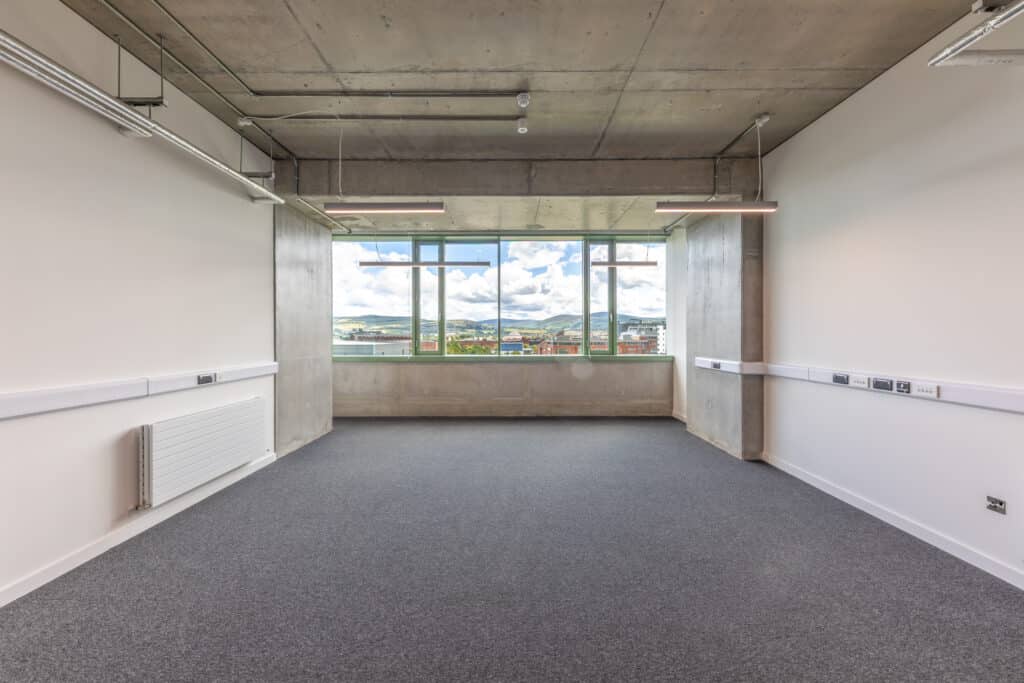
If your search is centred on South Dublin, WorkIQ at Innovation Quarter Tallaght is worth including on your shortlist. It is a purpose-built facility — part of a €16 million development — offering private offices, coworking desks, and meeting rooms alongside business support and community programming. It is most relevant for founders, entrepreneurs, and small teams who want more than a desk: the community and support infrastructure are a genuine part of the offering. If your primary need is a large corporate floor plate or a city-centre address for client-facing work, a different type of provider is likely a better fit.
Caveats and Evidence Limits
A few honest limitations are worth naming before you use any of the above as a decision guide.
Workspace availability and pricing in Dublin change frequently. Any specific rate or availability detail you encounter — including from provider websites — should be verified directly before you rely on it. What was accurate six months ago may not reflect current terms.
The framework above is generalisable, but it does not account for every situation. A regulated business with specific data security or compliance requirements, for example, will need to add those as explicit criteria. A team with significant equipment or storage needs will weight physical space differently than a laptop-first team.
Community quality is also genuinely hard to assess in advance. The best signal is time spent in the space, not descriptions of it. Treat any provider’s characterisation of their own community as a starting hypothesis rather than a confirmed fact.
Common Questions About Finding Workspaces in Dublin
Where should you start when searching for a workspace in Dublin?
Start with your own requirements, not with a provider list. Write down your capacity needs, budget ceiling, location constraints, and any non-negotiables before looking at specific spaces. This prevents the common pattern of anchoring on the first appealing option and then rationalising it.
How can teams move quickly to the right workspace without wasting time?
Apply a simple filter at the discovery stage: location within acceptable commute range, capacity that matches your team size with some headroom, and pricing that fits your all-in budget. Anything that fails one of these three filters should be dropped before you invest time in a visit or negotiation.
What navigation mistakes should teams avoid?
The three most common are: searching only in the city centre and missing strong suburban options; comparing headline rates without accounting for add-ons; and committing to a term longer than necessary before trialling the space. All three are avoidable with a structured process.
Where should teams look for office space when exploring South Dublin options?
South Dublin has a growing cluster of purpose-built and managed workspace options, particularly around Tallaght, Sandyford, and the surrounding area. Local enterprise offices and county council-backed innovation centres are useful starting points alongside direct provider searches.
The Practical Takeaway
Workspace search in Dublin works best when it follows a method rather than a feeling. Define your inputs before you browse. Compare options on consistent, all-in terms. Visit in person and trial before you sign anything. These three habits reduce the chance of a poor fit and make the process faster the second time you go through it.
The Dublin market has enough variety — from city-centre hot desks to purpose-built suburban innovation centres — that most teams can find a genuinely good match if they apply the right criteria. The work is in being clear about what those criteria are before the search begins.